
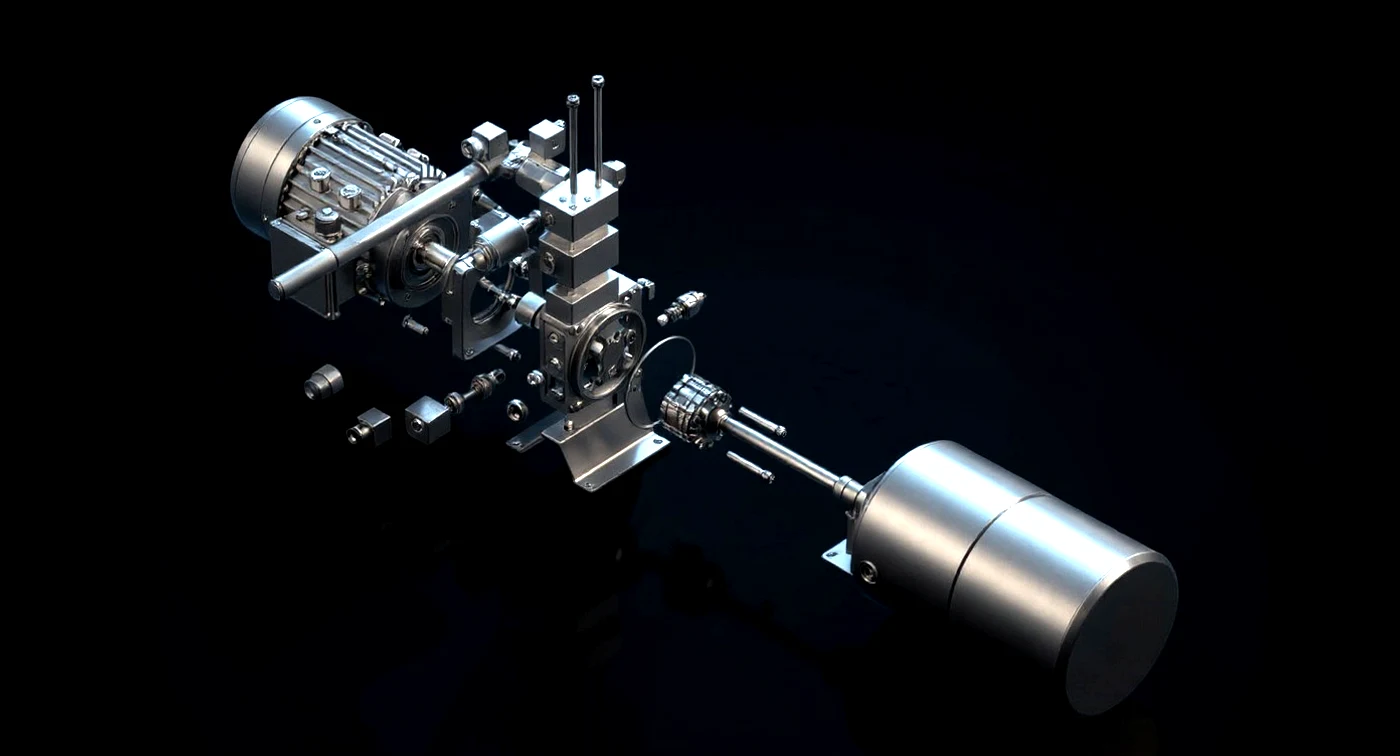
The 6 factors that move the price
1) The motor: frame size and type (a compact 12V DC costs less than a large three-phase; special voltages cost more). 2) The pump: displacement itself matters little, pressure class more. 3) The reservoir: litres and material (plastic vs steel). 4) The valves: every added function (double acting, controlled lowering, holding) is one more component on the manifold. 5) Quantity: a single prototype and a hundred-unit batch have very different unit costs. 6) Customisation: special ports, coatings, dedicated documentation, markings.
| Factor | What drives the cost |
|---|---|
| Motor | frame size and type; special voltages cost more |
| Pump | pressure class more than displacement |
| Reservoir | litres and material, plastic or steel |
| Valves | every added function is one more component on the manifold |
| Quantity | single prototype and batch have very different unit costs |
| Customisation | special ports, coatings, dedicated documentation, markings |
Why nobody publishes a price list (and we publish this instead)
A custom power pack is a bill of materials of 15 to 30 components chosen for your application: two configurations that look alike can differ in price by 40% because of a different motor or three extra valves. A "from" price would be pure marketing. We prefer to tell you what the price depends on and give you a real quote quickly: it is free and without obligation.
How do you really save on a power pack?
Real savings come not from the cheapest component but from correct sizing: a motor matched to the actual cycle avoids the next frame up; a correct reservoir avoids a heat exchanger; well-thought-out valve logic avoids unnecessary components. That is the advantage of buying from the manufacturer: someone who configures power packs every day knows where to trim without risk. The configurator on our Tools page is the starting point.
How do you get an accurate quote?
To quote accurately we need a few inputs: required force or pressure, speed or operation time, duty cycle, available voltage, control functions and expected annual quantity. With these six (or even just a sketch of your application) we prepare the bill of materials and the quotation. Send everything through the contact form, even as a draft: we handle the rest.